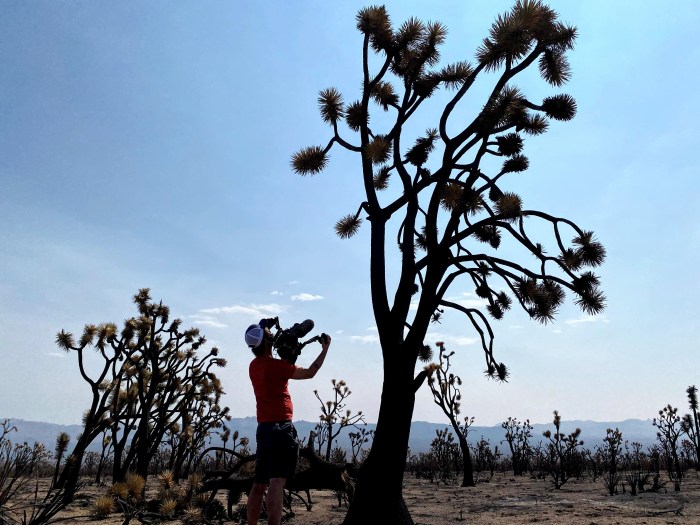
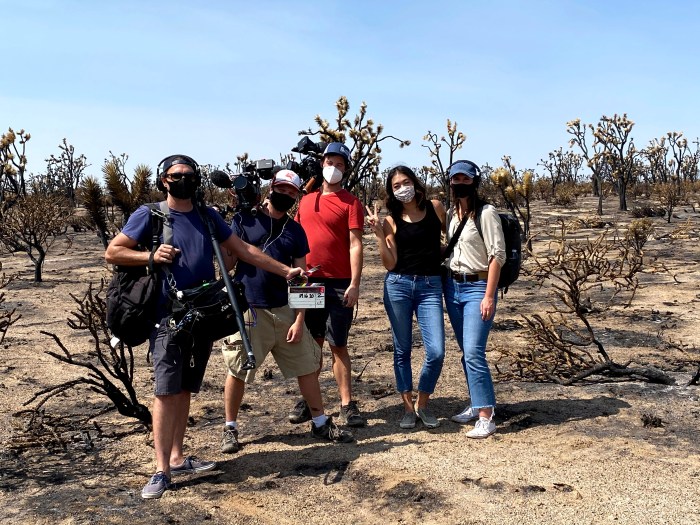
The skies are clear today, making the contrast between the giant plumes of smoke out my window so striking against blue skies.
My home is in on LA’s Westside near the coast, but not in a canyon or the hills, which are the two types of places most threatened by the multiple fires that broke out this week. The cause of these fires is under investigation, but we know they are fueled by those unpredictable Santa Ana winds. Of those winds, I’m reminded of Joan Didion’s writing, in Slouching Towards Bethlehem:
“It is hard for people who have not lived in Los Angeles to realize how radically the Santa Ana figures in the local imagination. The city burning is Los Angeles’s deepest image of itself. Nathaniel West perceived that, in The Day of the Locust, and at the time of the 1965 Watts riots what struck the imagination most indelibly were the fires. For days one could drive the Harbor Freeway and see the city on fire, just as we had always known it would be in the end. Los Angeles weather is the weather of catastrophe, of apocalypse, and, just as the reliably long and bitter winters of New England determine the way life is lived there, so the violence and the unpredictability of the Santa Ana affect the entire quality of life in Los Angeles, accentuate its impermanence, its unreliability. The winds shows us how close to the edge we are.”
On Monday, my friend Morgan and I were eating lunch out on a patio, soaking in the beautiful weather and feeling guilty that we had it so good in LA, while so much of the rest of the country was buried under snow and sleet. (Morgan is now out on fire lines reporting for NBC News.)
By Tuesday, winds had shifted and picked up so fast that the speed of spreading wildfires was measured in miles per hour. On that day, the largest of the many fires in LA county, the Palisades Fire, burned to ashes the neighborhood where my partner Rob and his family grew up. The humans are safe, but so much property is wiped out. The post office where his sister mailed her college applications. Where they bought their Thanksgiving turkey every year. Where they rode their bikes. (Rob’s sister Joanna wrote heart-wrenchingly of this, for The New York Times.)
Below is video of the Palisades Village part of Pacific Palisades, on Tuesday night at sunset.
On Wednesday morning, I awoke to a message asking whether I could be on Morning Edition in 20 minutes. Before I went to sleep the night before, I had reached out to my old colleagues at NPR on the national desk, which is the desk that springs into action in a disaster. By the time I woke up, the editors of this metastasizing story were hungry for more coverage and I frankly felt relieved to be able to pitch in to contribute. So far, between a near constant stream of spot news dispatched, I’ve reported on folks who lost their homes in Pasadena and the Palisades, and the extraordinary volunteer effort to aid during this disaster.
Thursday the girls were all home from school, as their classes were canceled. We held a morning meeting as a family to discuss how to help. Eva suggested fostering kitties, because she is a cat person. Luna suggested making sandwiches for those in need, which is something we do for displaced people at other times during the year. Our most anxious child, Isa said, “WHAT ABOUT US?! What if WE need to evacuate and our house burns down?” By evening, we had made the sack lunches for Covenant House, a shelter for displaced young people, and I delivered them to K-town since I was reporting in that neighborhood anyway. Seeing the outpouring of donations and community come together in this crisis moved me deeply; I love Los Angeles, I love all its shapes and sizes and colors and the faith folks have in this place and each other.

And folks on Instagram got us in touch with a woman in the Palisades who lost her home and needed to find shelter for their eight cats. Now we have Minx, a fire victim and evacuee, at our house.

Friday, thanks to enduring relationships with NPR producers, Janet W. Lee, who happened to be in town, mixed our K-town piece while I tried to keep the kids occupied, as schools remain closed. By evening, Rob’s mom, who thought she was okay to head back to her Brentwood house, had to heed the warnings to stay out of the mandatory evacuation zone, for the officials had instituted a dusk to dawn curfew, which remains in effect.
What a year this week has been. There is no one in this county of 10 million that doesn’t know someone who lost everything. The scale of this disaster will change this special place forever. We count ourselves among the fortunate ones. Still cozy, in our own homes, with our creatures, and with all the food and water and power we need. Please consider giving to these aid organizations, which my friend and fellow Angeleno Chris Duffy shared this morning:
- A compiled list of families affected by the Eaton fire that you can support directly
- Mutual Aid LA Network (MALAN) Fire & Wind Storm Resources
- Stand Up for Standups – specifically for comedians who need support, fill out this form
- Inclusive Action – a fund for open-air workers who have lost all their income
- The LA Food Bank is always a great resource and a wonderful place to donate or volunteer
- SELAH does great work year-round and is specifically helping unhoused folks during this brutal period of time to be living outside
- LA Works is keeping an updated list of volunteer needs throughout the area.